Eduaction
Education is one of the most vital pillars of any modern society. Each country has its own unique school system, and its main aim is to provide education for children, prepare teenagers for their future jobs, and guide them toward further education. In the Slovak Republic, the landscape of education is diverse, consisting of state schools, private schools, and church schools. While they all follow a similar national curriculum, their funding models differ significantly. Education at state schools is generally free of charge, making it accessible to all citizens. In contrast, pupils and students who study at private schools must pay school fees, often called tuition. Church schools represent a middle ground, as they are financially supported not only by the state but also by religious organizations.
A fundamental aspect of the Slovak system is compulsory school attendance, which currently lasts for ten years. This ensures that every child receives a baseline of knowledge and social development. While this mandatory period usually ends when a student reaches the age of 15/16, the majority of students choose to continue their studies well beyond this requirement to better prepare for the competitive job market.
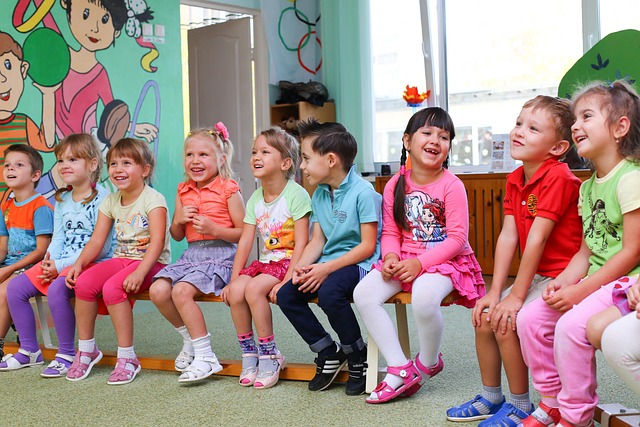
The educational journey often begins before a child reaches the age of six. Before attending primary school, children can go to nursery schools and kindergartens, which constitute pre-school education. In these environments, the focus is not on academic pressure but on social development. Children develop their social skills, learn to interact with peers, play games, and mentally prepare for the structure of formal school attendance.
Most children in Slovakia start to attend primary schools at the age of six. This transition marks the beginning of formal academic training. During the first year of primary school, students focus on the essential building blocks of knowledge, often referred to as the three Rs: reading, writing, and arithmetic. These skills are the foundation for everything that follows. The primary education journey is divided into two distinct stages. The first primary education stage lasts from the age of 6 to 10 and serves as a basic platform for all future studies. Following this, children spend the second primary education stage from the age of 10 to 15, which covers the fifth to the ninth grade. While most children complete this at a standard 9-year primary school, the most talented and ambitious of them have the option to apply for 8-year grammar schools, known as gymnasia, which offer a more rigorous academic path starting after the fifth grade.
Once primary education is completed, students move into secondary education, where they must choose a path that aligns with their future goals. There are several types of secondary schools. Grammar schools or gymnasia focus on a broad, general education and are primarily intended for students who plan to go to university. Specialized secondary schools focus on specific professional fields such as nursing, business, or engineering. Vocational schools are designed for students who want to learn a practical trade, preparing them for immediate entry into the workforce in roles like mechanics, chefs, or construction workers.
The culmination of secondary education is the school-leaving exam, known in Slovakia as the maturita. This is a critical
milestone, as passing this exam is a requirement for anyone wishing to apply for higher education. The school report
received at the end of each term reflects the student's progress, but the school-leaving certificate is the ultimate
proof of completing secondary studies.
The subjects taught at school vary depending on the level of education and the type of school. Typical school subjects include mother tongue and literature, foreign languages such as English or German, mathematics, informatics, history, geography, biology, chemistry, and physics. Additionally, students participate in physical education, art, and music to ensure a well-rounded development.
The effectiveness of learning is not just about the curriculum; it is also about the environment. If the teacher is a professional and knows how to motivate their students, the atmosphere during the lessons can be positive and friendly as well as productive. In such a setting, the educational process becomes more effective and enjoyable at the same time. Modern education increasingly emphasizes critical thinking and the use of technology, moving away from simple memorization to ensure that students can apply their knowledge in real-world situations.
After passing the school-leaving exams, many students choose to continue their education at a university or college. Higher education is generally divided into three main levels: the bachelor’s degree, the master’s degree, and the Doctorate. University studies allow for a much higher degree of specialization. Unlike primary and secondary schools, university life requires significant independence. Students attend large lectures and smaller seminars, and their success is measured through rigorous examination periods. It is important to note a common linguistic distinction: while in British English we refer to primary and secondary schools, American English uses the terms elementary and high schools. Students should be careful not to confuse high school with university, as they represent different levels of the educational hierarchy.
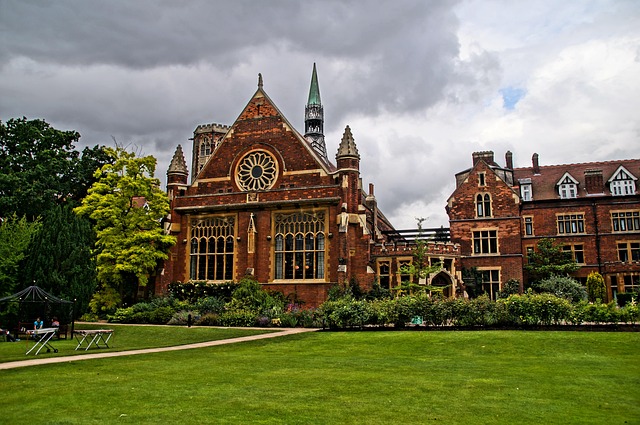
As society evolves, the concept of education is expanding beyond the walls of traditional schools. Lifelong learning has become a necessity in the modern digital age. Because technology changes so rapidly, the knowledge gained during formal schooling must be constantly updated. This includes professional development courses, online learning, and adult education programs. The goal of any school system remains to foster a love for learning that lasts a lifetime, ensuring that individuals can adapt to a changing world while contributing meaningfully to their communities.
While the Slovak system provides a structured path, it is helpful to compare it to global standards. In many countries, the focus is shifting toward more inclusive education and the integration of students with special needs into mainstream classrooms. Challenges such as bullying, the digital divide, and the pressure of standardized testing are universal issues that educators worldwide are working to resolve. By creating a supportive atmosphere and focusing on both academic and social-emotional learning, schools can better prepare the next generation for the complexities of adult life.

Obrázky použité na tejto stránke sú čerpané zo stránky:
pixabay.com